Electrical checks before buying a house
A practical checklist for understanding what a normal property viewing can and cannot tell you about the fixed electrics.
What a viewing can tell you
You may notice cracked sockets, loose switches, scorch marks, exposed cables or a consumer unit that looks very old. You can also ask when the electrics were last inspected and whether the seller has electrical certificates for recent work.
Those observations are useful questions, but they do not prove that the installation is safe or unsafe. Do not remove covers or try to test wiring yourself. An electrical problem can be hidden behind a wall, socket or consumer unit that looks normal.
Checks to make before you commit
Ask the seller or agent:
- Whether there is a recent Electrical Installation Condition Report (EICR).
- Whether the property has had a rewire, new circuit or consumer unit replacement.
- Whether certificates or building-control paperwork are available for relevant recent work.
- Whether there are known issues such as repeated tripping, dead sockets, flickering lights or signs of overheating.
- Whether an electrician can access the consumer unit and the rooms during an inspection.
Electrical Safety First advises home buyers not to assume that a normal home survey is a full electrical check. Its buyer guidance recommends checking for a recent EICR and arranging a suitable inspection where one is not available. Read the current advice at Electrical Safety First’s home-buyers guidance.
What an EICR helps you understand
An EICR is an Electrical Installation Condition Report. It records the condition of the fixed installation and any observations or recommended remedial work identified during the inspection and test.
The report is useful for a purchase decision because it gives you more information than a quick visual look. It still needs to be read in context: the report records the installation at the time of the inspection, and it does not turn an old house into a new one or set a purchase price for you.
Warning signs worth taking seriously
An inspection is especially worth discussing when you see damage, smell burning, find warm or discoloured accessories, hear buzzing, notice repeated tripping or cannot get a clear answer about previous electrical work. Keep your distance from damaged equipment and do not touch exposed conductors.
Do not jump straight from one warning sign to “the house needs a full rewire”. The useful next decision is to have the installation assessed, then discuss what the findings mean and whether any work should happen before completion.
Asking for an EICR quote
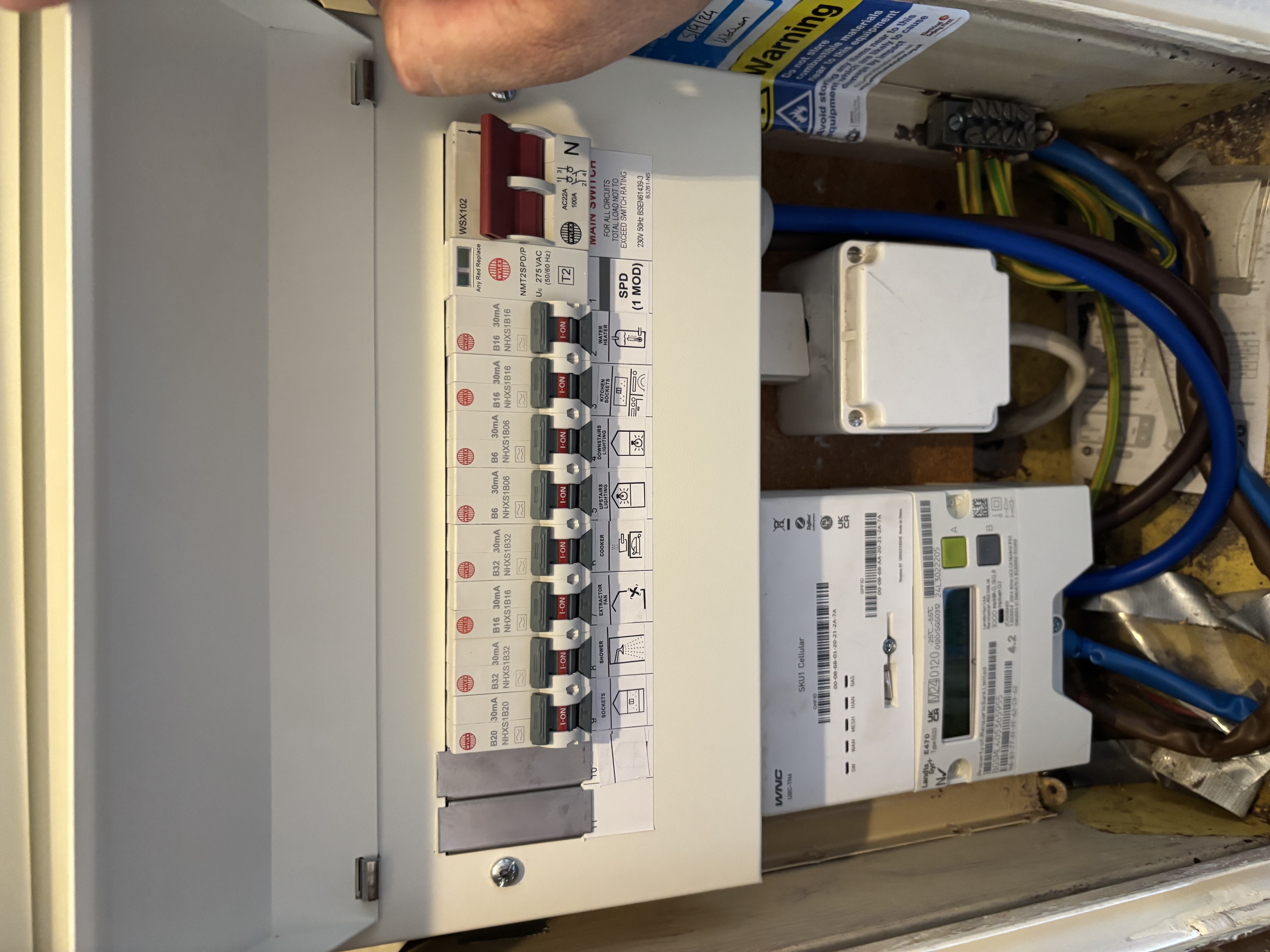
For a domestic EICR enquiry, send the property area, why the report is needed, the property type and any safe photos of the consumer unit or visible issue. It is also useful to mention any known tripping, recent alterations or paperwork the seller has provided.
J Burton Electrical covers domestic EICR enquiries across Romford, Essex and East London. Call 07769223108 or email jburton486@hotmail.co.uk for a free quotation.
Frequently asked questions
Does a standard house survey include a full electrical inspection?
Usually not. A standard survey may record visible concerns, but it is not a substitute for an inspection and test of the fixed electrical installation. Ask what the survey actually covered.
Can I request an EICR before buying a house?
You can ask the seller for any existing report, or arrange an inspection as part of your purchase checks. Confirm access and timing with the seller and your conveyancer.
Does an old consumer unit automatically mean the house needs a rewire?
No. The age or appearance of one component does not establish the condition of the whole installation. An inspection is needed before deciding whether repair, replacement or rewiring is appropriate.